

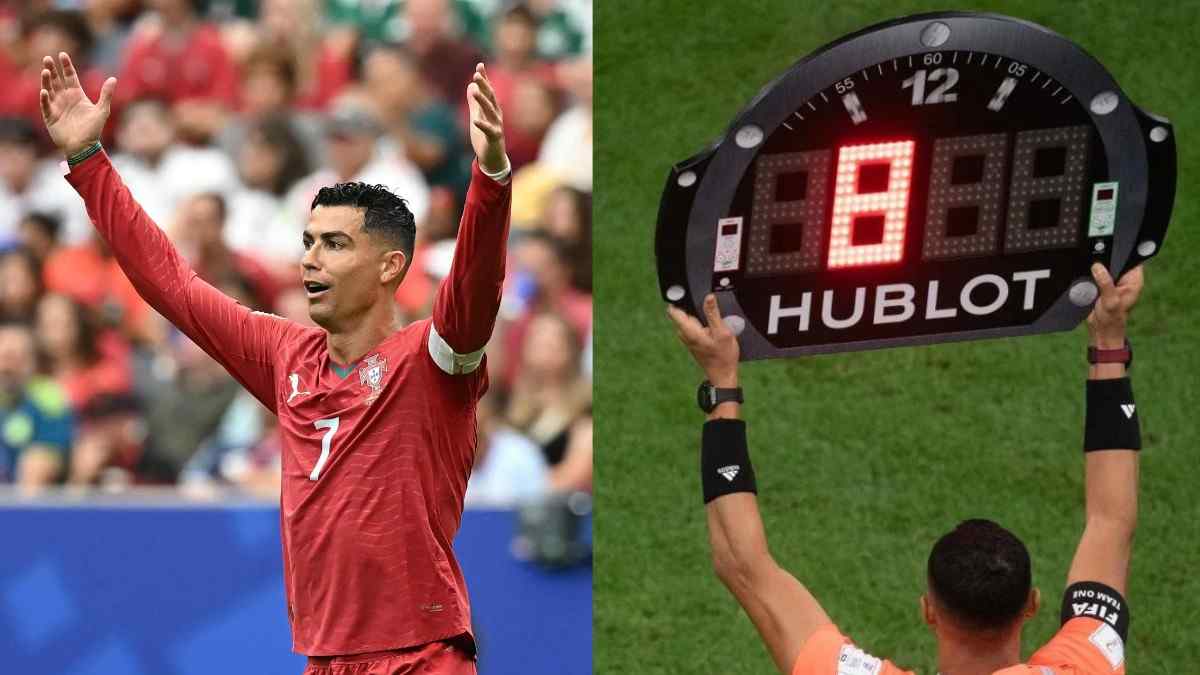
Football has no fixed limit on extra time. The referee alone decides how many minutes to add, based on how much time the half actually lost.
Most matches only add three to eight minutes per half. Recent seasons have pushed that number much higher. The 2023-24 Premier League season averaged over 11 minutes of added time per match, up from about eight minutes the year before.
This article explains what added time actually is, how referees calculate it, who has final authority, and how it works differently in knockout matches. It also covers the record cases that pushed added time far beyond normal limits, and the myths that still confuse fans.
What Is Extra Time?
The phrase extra time actually covers two different things. Fans often use it to mean the extra minutes added at the end of a normal 45-minute half. Referees add this time to make up for stoppages during play.
In knockout competitions, extra time also refers to a separate 30-minute period played when a match ends level. This period has its own two 15-minute halves, its own short break, and its own added time at the end of each half.
How Referees Calculate Added Time
Every stoppage adds seconds, and those seconds stack up fast once substitutions, injuries, and reviews are counted together.
| Cause | Typical Effect on Added Time | Real Example |
|---|---|---|
| Substitutions | Roughly 30 seconds each, added on top of everything else | A team using five subs can add 2 to 3 minutes alone |
| Injury assessment | Clock keeps running, but the lost time gets added back | Serious head or leg injuries can add several minutes |
| Time wasting and cards | Referee adds time lost to slow restarts or bookings | A yellow card for delaying play pushes the total higher |
| VAR checks and reviews | Every second of a review gets added back | Long penalty reviews can add 2 minutes or more |
| Goal celebrations | Referee counts the time players spend celebrating | A last-minute goal can add 30 to 90 seconds |
| Cooling and drinks breaks | Scheduled breaks in hot weather are added in full | Cooling breaks run 90 seconds to 3 minutes each |
| Unusual delays | Floodlight failures, drones, or crowd trouble all count | A 2019 English Cup match added 28 minutes after lights failed three times |
Now let’s break down what made each cause stand out.
Substitutions: The Silent Time Thief

Substitutions rarely grab headlines, yet they quietly build up more added time than almost any other single cause.
Since 2023, referees in England have been told to count the full walk from the touchline to the halfway line, not just the moment a player leaves the pitch. That change alone added extra seconds to nearly every substitution across the league.
Substitutions look harmless on their own. Stacked together across a full match, they explain a large share of why games now regularly pass the 100-minute mark.
Injury Assessment: When the Clock Waits for the Player
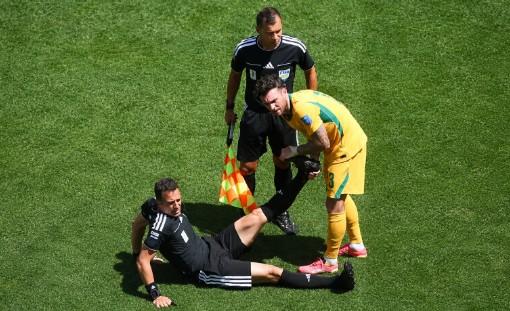
Injury stoppages cause some of the longest and most unpredictable additions to a match.
Head injuries carry extra weight under current protocols. A player suspected of concussion must leave the pitch for a full assessment, and none of that time counts against the 90 minutes.
Genuine injuries deserve every second of stoppage they get. The tougher question is whether players sometimes stay down longer than needed, knowing the clock will simply pause for them.
Time Wasting and Cards: The Deliberate Delay
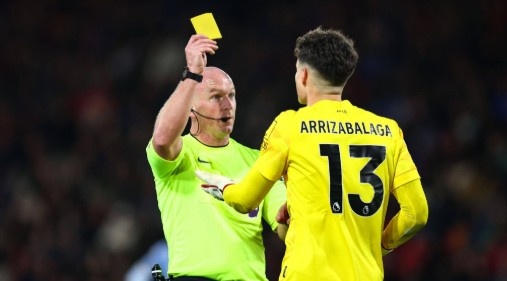
Time wasting is the cause added time was designed to punish in the first place.
Goalkeepers slow to take goal kicks became such a problem that IFAB introduced a countdown rule. From 2026, that same countdown now applies to throw-ins and goal kicks too.
A referee who books a player for delaying a restart must still add the time that was lost before the card was shown. The punishment and the time addition work side by side, not instead of each other.
VAR Reviews: Technology’s Time Cost
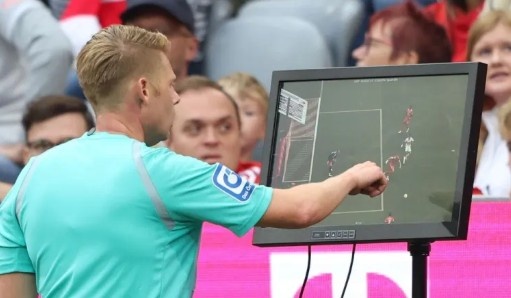
VAR reviews were meant to fix mistakes, but they come with a real time cost that referees must repay.
At the 2022 World Cup in Qatar, referees added more than 100 minutes of stoppage time across the first ten matches alone, largely because of VAR checks and tighter injury counting.
FIFA’s Chairman of the Referees Committee, Pierluigi Collina, defended the change directly, saying fans do not pay to watch a 43-minute match. That comment became the guiding logic behind every added time change since.
You can watch the VAR review here!
Unusual Delays: The Freak Events Nobody Plans For
Unusual delays produce the most extreme added time totals in football history, far beyond anything a normal match sees.
Floodlight failures, pitch invasions, drones, and severe weather all count toward the total, because the clock must reflect every minute of play that was genuinely lost.
Who Decides Added Time?
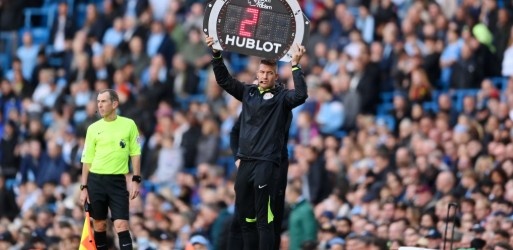
The main referee holds sole authority over how much time gets added. The fourth official displays the minimum figure on the board near the end of each half, but that number is a floor, not a ceiling.
The referee can extend added time further if more stoppages happen after the board goes up. The referee cannot reduce it below the displayed minimum. VAR officials communicate exact review lengths to the referee by headset, and that time gets folded into the final total.
Extra Time in Knockout Matches
When a knockout match ends level after 90 minutes, many competitions move to a 30-minute extra time period, split into two 15-minute halves. The same principles apply as in normal time: both halves are equal length, there is a short break, and the referee still adds time at the end of each half for stoppages.
Many competitions also allow an extra substitution during extra time, on top of whatever changes a team has already made. If a penalty kick needs to be taken or retaken right at the end of a half, the referee extends play until the kick is completed.
If scores remain level after extra time, the match moves to a penalty shootout. Each team takes five kicks in turn from the penalty spot. If the teams are still tied after five kicks each, the shootout continues in sudden death rounds until one team leads after an equal number of kicks.
Record-Breaking Cases
A handful of matches show just how far added time can stretch once a referee judges the delay was real.
| Match | Competition | Added Time | Primary Reason |
|---|---|---|---|
| England vs Iran (2022) | FIFA World Cup | 24 minutes | Early head injury and concussion check |
| Burton Albion vs Bournemouth (2019) | Carabao Cup | 28 minutes | Floodlights failed three separate times |
| Brentford vs Wolverhampton Wanderers (2022) | Premier League | 19 minutes | Drone forced players off the pitch |
These cases sit apart from ordinary matches. A normal top-flight game now runs 10 to 13 minutes over its scheduled length. A genuine crisis, like a floodlight failure or a drone over the pitch, can double that figure in a single half.
Common Myths
• Myth: Stoppage time is capped at five minutes. Truth: No rule sets any maximum. Referees add as many minutes as the stoppages genuinely cost.
• Myth: The fourth official decides added time. Truth: The head referee holds final authority. The fourth official only displays the board.
• Myth: Referees must end the match the moment added time runs out. Truth: Play continues until the ball next goes out or an attack finishes, even past the displayed figure.
Related Reads
Conclusion: Football Has No Maximum Limit on Added Time
Football places no cap on added time. The referee alone decides the final figure, based on substitutions, injuries, time wasting, VAR reviews, and any unusual delay that genuinely costs playing time.
The fourth official’s board shows only a minimum, and the referee can extend it but never shorten it. Recent seasons, led by the 2022 World Cup, pushed that figure higher across the sport, with the Premier League now averaging over 11 minutes a match.
Knockout matches follow the same principles across their own extra 30 minutes, and unresolved ties move to a penalty shootout. Extreme cases, from floodlight failures to on-field emergencies, show that the only real limit on added time is how much play was genuinely lost.